Every Most-Anticipated List Needs a Hype Penalty
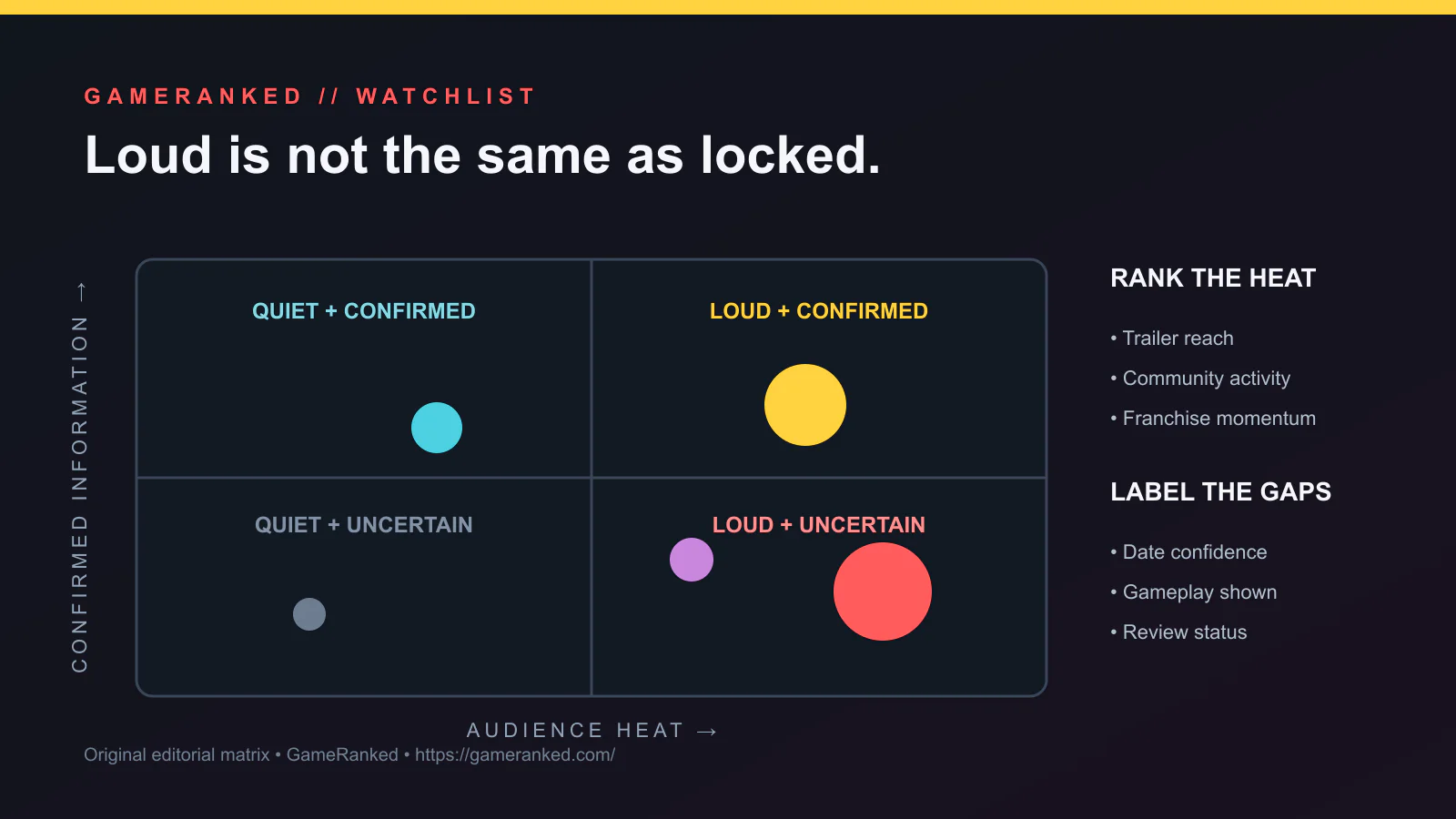
Image: GameRanked
Most-anticipated rankings pretend excitement and confidence are the same number. They are not. A mysterious sequel can be wildly exciting and impossible to evaluate.
Two scores, not one
Give every unreleased game:
- Excitement: novelty, fantasy, team, genre fit, and potential.
- Evidence: playable demo, uncut gameplay, current build reports, specific systems, platform details, and dated developer communication.
Then apply a hype penalty when marketing specificity exceeds product evidence.
What counts as stronger evidence
Official store descriptions and trailers establish claims the publisher makes. A public demo or playtest shows more. Independent footage tied to a known build shows more again. None guarantees launch quality, but the evidence ladder should affect rank.
Valve’s release guidance encourages honest dates and makes clear that plans can change. Anticipation coverage should preserve that uncertainty rather than laundering a target date into a promise.
Source
Key takeaway
Let a game rank high for possibility, but show the confidence score beside it. Hype is a feeling; evidence is a separate column.
anticipated gamesgame rankingshypetrailers